Saturday, January 13, 2024

Light/Darkness ideas: following up after playtesting

My thanks to all who read my recent thoughts on procedures for light and darkness in dungeons. An unfortunate illness kept half my gaming group out of action last weekend, but the cancellation of our normal game opened space for a little dungeon crawl to play-test those procedures with a couple other available players. 


Playtesting is funny business. Sometimes you discover that something has really clicked; more often, of course, you find in practice the holes and problems that you missed in design. This time around — I got a bit of both! Before I summarize what worked well and what didn’t click for my players, I’ll confess that I’m not a very scientific play tester. My tendency is to be ambitious, and to use my limited play-testing opportunities to try out a bunch of things at once. Any lab scientists out there will know, of course, that this means (too) many variables all competing for analysis. If all my games were play tests, I’d try to evaluate just one rule change at a time.
 
If wishes were fishes... Anyway, some of the problems we encountered have little to do with the light/darkness rules, so I can isolate those out, but it’s worth noting that the session ended with a TPK — for two reasons. First, I was trying out some tweaks to combat rules that made fighting deadlier; second, we had freakish luck - I rolled really well for the monsters, the players rolled really poorly for the first half of the night (though one player did get back-to-back Nat 20s later in the evening), and the random encounter rolls were off the hook frequent! So, combat was deadly and we had more combats than I expected. 
 
Anyway, on to the darkness/light feedback.
 
If you’ve read my last post, you know that one part of my philosophy here is to move away from the ubiquitous OSR emphasis on inventory management. My rules for managing dungeon illumination aimed to create decisions around encounter risk and trap vulnerability without relying on logistical bean-counting. I also wanted to focus on the more emotionally satisfying (to me) narratives of danger looming in the darkness. 
 
All that was validated strongly by my players. In short, they said that they, too, are tired of fiddling with inventory slots; one particularly hates the numerical resource management micro-game. That feedback was validating for my approach, though it certainly pushes against many widespread OSR principles. To be clear, these aren’t players who hate old-school play style and who just want the world handed to them on a bed of 24-times-per-short-rest superpowers. They’ve amply demonstrated their willingness to think creatively while solving problems, or to die horribly while fighting monsters. 
 
So, for what it’s worth, here is one local group’s plea to the indie-OSR-NSR-whattheheckSR design community: Knave, Cairn, Mausritter, etc. are dope, but please keep designing things that don’t rely on micromanaging inventory, too. 
 
Ok, what about the light/darkness thing? 
 
The players enjoyed my greater attention to lighting limits. They endorsed my enhanced narration of the uncertain darkness. Having light sources really only illuminate part of each new room led to more atmospheric play and — in a few instances — extra decision points about which risks to accept. So all that was a win.
 
However, the players advised against the ways I’d mechanized illumination. The setup for the playtest probably didn’t show my rules in their best light (uh, sorry for that one): to save time, I used a free online dungeon with fairly small rooms, and missile combat played almost no role in the session (those factors muted a few of the tradeoffs of the dungeon crawling stances + light states). The fact that bright light made a random encounter much likelier rankled a bit because of the aforementioned wacky dice rolls, which produced far too many encounters for such a small dungeon. Nonetheless, I did agree (with some chagrin) that my formalized attention to mechanical triggers didn’t match the perceived usefulness of the different light states in play. 
 
Where does this leave me? Honest, thoughtful feedback about rules remains helpful, even when pointed against “my babies.” Although the playtest revealed some issues, it also was paradoxically somewhat liberating. My players and I agreed that without implementing my full-blown procedures as described in my last post, we should add the following to our games:
 
+ pay more attention to who is holding the light - monsters may try to extinguish it

+ assume lights illuminate much smaller dungeon areas, to heighten narrative drama and reframe exploratory choices
+ minimize inventory management where feasible
 
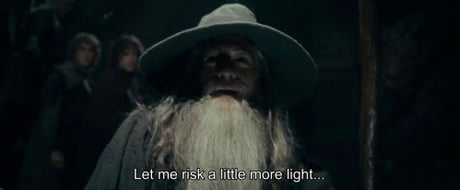
Additionally, I think I may still include the option to shine much brighter light that does call for an immediate, higher-risk encounter roll — but I may not make the modifier as punitive. (Think Gandalf, again: “perhaps we can risk a bit more light…”). 
 
What is freeing to me is that my musing about the experience of dungeon crawling has led me to some new resolutions about play, but these are resolutions we hope to implement through fewer rules, instead of more procedures. There’s something refreshing about a freeform solution to a problem. How will it work in future sessions? Dunno. I’d better keep playing to find out.


Saturday, January 6, 2024

Less Bean-Counting, More Darkness: Improved Dungeon Exploration Stances

 When does darkness matter, and when doesn't it? 

First, two anecdotal snapshots: 

It was my return to the hobby, my first time GMing an RPG in decades. In hindsight, the adventure I created was just a linear series of encounters. But the boss fight really clicked! The PCs were in a partly-flooded underground chamber, fighting a hulking half-troll, half-giant-toad thing with big tusks...which kept hopping into the water and then bursting back out to attack a new victim. 

And then the monster extinguished the torch. Today, despite the many sessions and lessons learned in play and study since then, I still relish the look of sincere alarm (could I say fear?) on a player's face as we worked out the rest of the scene. 

Years later. Our stage now is on the inner plateau of the Isle of Dread, albeit hacked quite a bit to suit my own setting. The party's ranger had snuck into an unknown faction's watchtower at night to scout it out, with only moonlight to guide his path. Before long -- once he'd already climbed up into a belltower -- he realized that someone awake and equally stealthy was hunting him through the shadows. The ensuing cat-and-mouse play, with minimal visual description, was both thrilling and consequential -- a risky roll led to the PC accidentally bumping the tower's bell, signaling his location and confirming the party's interference at the site. 

Now, what stories haven't I told you? 

That time that the fighter wanted plate armor, which meant he couldn't carry as many torches as he'd like. That time that a wizard's "Light" cantrip nerfed the entire light-as-resource-management game. The many times that I shrugged and just thought, "well, I'm sure somebody is carrying a torch, let's handwave it and get moving" because I had a bunch of other GM-stuff to process that felt more consequential. I won't tell you those stories, because they're ... boring. 

But they're also far more common, and likelier to happen under the rules I've leaned on for years. 


From "WHAT DO I CARE ABOUT IN PLAY?" to "OH CRAP, I MAYBE MADE A HEARTBREAKER!"

I'm grateful for good gaming and fruitful game-thinking over the recent holiday season. My adult gaming group has just started a new ROOT campaign, which looks like it should be a blast. But I also decided I'd like to jump-start some D&D for my kids in the months ahead, so I started thinking about Knave, and how I might like to change things (perhaps I'll say more about that in future posts). After many a keyboard-clack, I sat back and realized that I'd basically just written my own heartbreaker game, with a revised combat system, streamlined core classes that look more fun than a lot of vanilla D&D options, revised encumbrance, and an updated version of dungeon exploration processes.

For each area, it helped to sit back and brainstorm what I really enjoy from a narrative and gamist perspective before returning to a list of common OSR mechanics. I feel like I have ritually eaten a few of my sacred cows over the past couple weeks, and I hope that my new ideas, developed in consultation with the wisdom of the blogosphere, might better provide the play experiences that actually make me happier -- that actually give me better post-game stories to talk about (I haven't playtested this stuff yet, mind you, so I shouldn't really get too excited about my bespoke house rules portfolio). 

In today's post, I'm fleshing out my current thoughts about dungeon exploration. Actually, this involves a fair bit: revised thinking about encumbrance and logistics, encounters, meaningful tactical choices, room/setting description, searches and investigation, and especially light and darkness. The ideas for procedures below are a refined version of my recent thoughts on "dungeon exploration stances," which you all seemed to find interesting but a bit too fussy. Well, they're simpler now. I've also chewed a lot on my response to a variety of other blog posts, some new and some old enough to threaten "classic" status:

https://falsemachine.blogspot.com/2013/06/the-law-of-light.html

https://knightattheopera.blogspot.com/2019/09/lets-do-some-more-diy-d-and-hack-rules.html

https://deadtreenoshelter.blogspot.com/2020/03/ultra-bastard-d-illumination.html

https://www.mindstormpress.com/ransacking-the-room

https://diyanddragons.blogspot.com/2019/10/landmark-hidden-secret.html

https://diyanddragons.blogspot.com/2019/04/your-life-is-forfeit.html

https://diyanddragons.blogspot.com/2019/04/mechanics-for-resource-management-part.html

https://blog.thesconesalone.com/2018/07/dragon-warrior-and-how-i-discovered.html


Maybe come back someday and finish reading  my thoughts, please, after you've worked through those riches. :-D 

Before you read any further, here are the guiding design principles that have shaped my new proposed rules for dungeon exploration:

+ I think I'm tired of inventory management as a key part of gameplay. I imagine this one will be controversial; Knave-style inventory is key to ... pretty much everything (class archetypes, abilities, even Wounds) in many NSR/OSR systems these days. If I'm honest with myself, though, I think there are better ways to get to the emotional play experience I'm looking for - something that keeps logistical choices exciting and meaningful without bogging down play in bean-counting. 

+ I'm not that deeply committed to Gygax's advice about meaningful time records. I mean, they matter a lot when they matter, but sometimes they don't. A recent comment exchange on Noism's blog, with a link to an earlier post about arbitrary time-signatures for combat rounds in D&D, got me thinking about how the length of a round sort of only matters for tracking the logistics mini-game -- but what if (see above) one did away with much of that mini-game anyway? What if combat and exploration focus not on scientific precision for record-keeping, but on the bits of play that (my) players really get satisfaction from -- engaging with the actual adventure? [One might say there's a false dichotomy here, but I'm running with it]. 

+ For exciting play, trade information for risk/vulnerability. Fear of the DARK is intuitive and important, and I want more of it in my games. I'm not inventing anything new here -- on these issues, see that list of older blogposts by other writers, above. The questions that are "logistical" but which also excite me are NOT "did we bring enough stuff?" but "oh no, are we comfortable ignoring that shadow? But can we afford to use more light here?" 

Ok, that's some background on my approach. Now, details. On with the show. 

As a reminder, I am cobbling together all sorts of ideas from other writers, so please do note the blogs linked above as you think about these rules. 


LIGHT LEVELS AND THEIR EFFECTS

All spaces in the dungeon have one of three Light states: Bright Light, Dim Light, or Darkness. 

When a party enters a new room/keyed area, note its Light state. Also, make a random encounter roll, with 12 on 1d12 provoking a random encounter (various factors, below, will make these more likely). 

The party enters a new room. 

GM rolls a random encounter check on 1d12, adding +3 for Bright lights if carried by the party, and +1 for each hireling [this does not include companions, who are limited by a PC's CHA modifier and who will fight alongside the party]. On a 12, there is a random encounter.

The GM describes the room. 

Light may be ambient -- already provided as part of the environment, as sunlight through cracks, torches lit in wall sconces, etc. -- or it may be carried by the PCs. This distinction matters. Most light effects occur no matter who put them there, but when PCs introduce their own light to a dungeon space, the dungeon is more likely to react -- random encounters become more likely. 

Lighting a held candle takes one full action. Digging through your bag to recover a new candle also takes one full action. If your party only had one light held, and a monster just extinguished it (which can be attempted using a Combat Stunt), you can count on at least two rounds until you can see again. Chomp, chomp, the darkness has teeth. 

There is no need to track how many little candles you brought, since the PCs aren't silly enough to come crawling without lots of them.

On Light states:

+ DARKNESS: The GM offers no new visual descriptions of any kind. ALL PC rolls are made with Disadvantage. Because Dim Light is the default, if the players get stuck in true darkness, they can always pull out another candle nub and produce Dim Light again -- if they aren't too busy fending off something with tentacles in the darkness. 

+ DIM LIGHT: this is the default state for moving parties, and adds no further risk to random encounter rolls. It requires 1-2 lit candles (or torches, or whatever; treat them equivalently - as per Dwiz's Advanced Darkness ideas). Every light requires the full use of one hand, which cannot carry a different item. The players must declare exactly who is carrying each light. They should expect that nasty things that prefer darkness may target those PCs or their lights. (hired porters may carry lights, but note that non-professional hirelings each make random encounters more likely -- see below).  In a space with Dim light, PCs take Disadvantage to all their Ranged attacks (but there's no penalty to shoot at somebody holding a light). 

The GM only gives a reasonably accurate description of things within ten feet of Dim lights. Beyond that, they just hint at the shape and layout of the room/space. They describe things in structural terms and as blocks of dim color, shadow, and reflective shapes. 

+ BRIGHT LIGHT: Bright light requires at least 3 lit candles/torches, each held by a specific character's hand. Adding such light is tempting the underground's oppressive darkness and its inhabitants: a +3 modifier to encounter rolls makes a random encounter happen on a 9+ on 1d12. Moreover, the GM makes a fresh encounter check as soon as the party 'switches' to Bright light. However, the GM now describes all outwardly visible features of a room -- what Anne calls Landmark information -- at least out to 30-40 feet (these ranges are for game-fun purposes, not for simulationist accuracy). 

Here is a contrasting description of a room encountered in Bright vs. Dim light:

Bright Light: “You have entered a columned hall, about thirty feet wide and perhaps fifty feet long, with a parallel row of stone columns holding up heavy-looking stone blocks at the ceiling. In the middle of the room, a pile of gold objects - cups, coins, etc.  — gleams in your torchlight, but so does a thin, wet ring of what looks like blood around it. On the south wall, a fairly massive bronze rectangular altar stands flush with the wall, its sides streaked with what might be dry blood. There’s a leering face with horns sculpted onto each side of the altar. Right as you enter, you see a flicker of movement, and notice a humanoid shape dart through an open doorway in the far wall. What do you want to do?”


Dim Light: “You see what look like columns rising, fading away into the dark ahead of you. An irregular lump of something, several feet across and high, lies on the floor halfway across the room, to the west; your candle-light reflects weakly off it, here and there. A large rectangular blocky shape, almost as tall as you, is due south. As you enter, you think you see a flicker of movement retreat away into the shadows to the east; now you can’t see anything there but darkness. What do you want to do?” 


DUNGEON EXPLORATION STANCES

Last March I wrote about some possible Dungeon Exploration Stances. These updated rules are an improvement, and tie into the Light rules above.

There is no "neutral" stance in a dungeon; the party is always focused on staying alert OR looking friendly OR hiding OR resting OR or figuring things out than they are on all of those at the same time. Pick one, the moment the party enters the dungeon, and treat that stance as in effect until the party tells you they are changing stances. 

These rules assume side-based initiative (roll 1d8 for the party and 1d8 for their foes; high rolling team acts entirely and then swaps initiative; polearms grant individuals first action even if their team loses initiative, unless the other side also has polearms or reach). If ambushed, PC with highest WIS rolls a save to prevent a surprise round. 

ALERT STANCE: 

In Bright Light: PCs can't be surprised by (visible) foes. PCs automatically win the first initiative roll. Disadvantage to NPC reaction-table rolls.

In Dim Light: PCs get Advantage on a Save vs being surprised. PCs automatically win the first initiative roll. Disadvantage to NPC reaction-table rolls. [Don't forget that Ranged attacks are Disadvantaged in Dim Light].  

OPEN STANCE:

In Bright Light: Roll NPC reaction-table rolls with Advantage. PCs automatically lose first initiative roll if attacked. 

In Dim Light: Roll NPC reaction-table rolls with Advantage. PCs automatically fail any rolled saves vs. being surprised. PCs automatically lose first initiative roll if attacked. 

STEALTHY STANCE:

In Bright Light: If the party is carrying Bright light, they can't enter the Stealthy stance. In ambient Bright light, Stealthy stance benefits only apply against sightless foes. 

In Dim Light: PCs roll saves vs. being detected with Advantage. PCs may try to ambush foes with that Advantage, too. If the party is ambushed, the PCs roll saves vs. surprise with Disadvantage. NPC reaction-table rolls are made with Disadvantage. 

RESTING STANCE: 

A short rest takes at least ten minutes (and, in my current rules, resets hit points as per Mark of the Odd games). When a rest is declared, roll a random encounter check (with a 9+ on d12 encounter if resting in Bright light carried by the party). An individual PC may elect to skip the rest (and its benefits) and stay on guard. Resting PCs automatically fail saves vs. surprise if attacked (unless a PC standing guard passes a save vs. surprise), and the party loses the first initiative roll of a combat during a short rest.  

INVESTIGATIVE STANCE: 

 This one is connected to broader issues, so I'll flesh it out more below. 


INVESTIGATION THROUGH CONVERSATION AND/OR MECHANICS

Searching a room is tricky to integrate with stances, because you can resolve a search mechanically, but it's often more fun to just talk things through, inviting player skill to the fore -- until that takes too long and bores everyone. Generally, though, finding the hidden stairway because you asked a clever question is more fun than finding the concealed treasure because the dice saved you. 

Anne at DIY-and-Dragons (in the posts linked above) has some great thoughts about information detection and GM description. I'm riffing off much of that here (she recommends making "landmark" information freely available up front, "hidden" information available if somebody asks about it while risking interaction with the space, and "secret" info only if the player goes looking for it AND passes a dice check. 

I'm thinking of saying that once players have entered a room (at Bright or Dim light) -- and checked for any encounters -- they can choose to engage with parts of the room for as long as they want (that wording choice is deliberate - no need to track rounds/turns, other than assuming that an exploration turn is "roughly the time a party spends exploring one room if they aren't resting"). During that time, they can interact with objects -- opening the chest, stabbing the mattresses, trying on the spare cloaks, sipping from the weird fountain, etc. None of this is mechanized exploration, and whatever Exploration Stance the party was in when they entered remains in effect (as do effects of the light level). 

But perhaps the players want to skip past all that -- or maybe they've interacted with the room for a while but suspect they're missing something. Then, they may declare a shift to the Investigative dungeon exploration stance. This assumes that the party is taking all the time needed to give the full space a thorough shakedown, but they're also making themselves vulnerable to its potential hazards. Upon declaration of this stance:

+ GM rolls a fresh encounter check on the d12, with a +2 modifier for the more invasive searching (and also with a +3 modifier for Bright light carried by PCs, if relevant). If the party now decides to "upgrade" to Bright light, they may, but this triggers a third encounter check (but Bright light is more helpful...).

+ if in Bright light, ALL hidden (but not secret) information in the room is conveyed to the players. At minimum, this includes clues about secret doors and traps (but not necessarily how to open or disarm them). If a wizard is in the party, they might automatically detect magic items in the room, too. 

+ in in Dim light, the hidden information is revealed, but with the following caveats: there is a 4-in-6 chance that each trap, secret door, concealed treasure, etc., will be revealed or hinted at. A wizard in the party might confirm parts of a room that include magic objects. The party thus has incentive to risk Bright light, though they might prefer to play it safe and hope for the best (the GM makes hidden rolls here, btw). 

SUMMARY

As noted, I still need to test these in play, but I'll blogify them in hopes they might inspire you (or lead you all to yell at me about problems I've overlooked). The key ideas are to cut out all the bean-counting around torch-carrying and duration, drilling right down to the interesting questions: what is that scary-looking shape in the shadows? Can we risk more light to check it out? Can we risk NOT checking? Why is the thing with all the eyes wrestling the wizard for the candle? Oh no, it's -- HELP! 


Sunday, December 31, 2023

New Year highlights, and thanks

 Happy New Year!

I realized recently that this blog will be five years old in a few months' time. Ironically, there were times not too long ago that I thought seriously about shuttering the blog -- but then, 2023 turned out to be my busiest year yet for posting here, with 35 total posts (that's 15 more posts than in 2022!). I shifted my approach a bit this year, allowing myself to post less consequential but more personal and creative things, like hobby-related art projects or comments on fan culture. But some of this was hopefully inspiring or useful -- discussing easy DIY foam wargaming terrain or a kitbashed/converted/scratchbuilt army for Epic: 40k has reflected fun things that brought me a lot of enjoyment and utility this year. 

On the RPG front, the highlight was reaching Electrum level on DTRPG.com for my historically informed Bronze Age/Sword-and-Sorcery character background generator, Brazen Backgrounds -- which also received a product update with some fresh and improved content. Hearty thanks to all who have purchased that product. In terms of some of my preferred posts about RPG theory this year, have a look if you missed posts about mechanics for dungeon exploration postures for adventuring parties, simpler character/faction-driven domain-play, or a cultural rationale for re-running dungeons

More philosophically, as I wrapped up a campaign this year I recorded my thoughts about choosing, running, ending, and being content with games and campaigns in their own season. 

Thank you for reading Gundobad Games. I'm excited about ideas for new posts in the season ahead. Best wishes for 2024, and happy gaming!


Saturday, December 30, 2023

Epic Knight Detachment fully kitbashed

 At long last, I have kitbashed all the figures needed for my Chaos/Traitor Knight detachment for use with Epic: 40,000. These are, again, Battletech minis modified with additions from the bitbox - occasionally through rather aggressive plastic surgeries. 

The plan for now is to run it as a mixed detachment of five Knight Castellans and six of the faster, lower-firepower, higher-assault Knights (the old 3e Epic rules -- or, rather, the community-made added rules for Mechanicum Knight forces -- just use the two kinds. 3e is a very straightforward system). 

Most of them still need primer, let alone paint; a few of them look rather silly for now, but I'm confident that once painted up they'll look quite nice (this has been my experience so far). 


Here are a few closeups of some of the final additions: 

Battletech 'mechs with bitz from the Chosen Chaos Marines sprues. That purple curved armor carapace was ... the lid of a dental floss pack! Once it's all spraypainted and spiffyfied, I think these guys will look great. 

That helm-crest was the blade of an Orkish axe. Now, I feel it gives this fella a bit more Oldhammer flair. 


Along with these, I have three other 'mech conversions to add - a Scout Titan and two Traitor Warhounds, who will look quite un-canonical! 

On to priming and painting. Whew! 


Thursday, December 21, 2023

[REVIEW] Soulbound: ULFENKARN, City at the Edge of Death

 Start with Ravenloft, D&D's iconic fantasy horror setting with a vampire frontman. Mash it up with Duskvol, the gloomy urban crime-scape from Blades in the Dark. And now funnel that mixture through Mordheim, the OG Warhammer ruined apocalyptic city, and season it with all the grotty grimdark WFRP-ness you can. Package the whole thing as an urban sandbox campaign setting, marinate the product in blood long enough to pickle everything, and you'll get something like Soulbound: Ulfenkarn, City at the Edge of Death (aff). If you're into horror gaming with loads of vampires and other undead, you'll find this new Warhammer roleplaying book a colorful, flavorful campaign resource (it's just that the color is all red, and the flavor ... well...). 


Cubicle 7 kindly provided a free copy for this review. You can purchase the game as a 240-page .pdf, with separate copies of about 11 maps from the book (including GM and player-facing city map variants), for $29.99 USD at DTRPG.com (this review uses affiliate links to DTRPG, which help support this blog's activities at no added cost to you - thank you!). This review is based on reading, not running; but I have run Soulbound previously (and I offered a pretty substantial, multi-part review it, here, here, and here). 


SOULBOUND GOES HORROR!

Let me make this clear, up front: if you really like horror in your fantasy gaming, I think you will quite like Ulfenkarn. But if you don't like horror all that much, you probably should move along to other products. Ulfenkarn gives you more than ample material to tell desperate vampire-hunting stories until the vargheists come home. It provides both narrative/setting support and mechanical tweaks to turn your Soulbound RPG into a genuine horror game. In fact -- hear me out here -- Ulfenkarn is so effective that I would not run it, at least not in its entirety or without some changes. 


No, wait, come back! Let me explain. It's a me issue, not an Ulfenkarn problem. That is to say: the more that I read of this book, the more I realized I'm not its ideal audience -- I'm just not into horror on the sustained, oppressive level this book serves. I do think this is a well-done resource. In fact, its gloomy effect on me as I read shows that the designers achieved what they wanted to do. Herein are stinking sewer canals full of sluggish blood mixed with human sewage, feuding necromantic body-collectors torn over rival visions for their order, haunted graveyard plots that pull the living into the earth, vampire aristocrats who run captive mortals like mice through a trapped maze for their amusement before feasting upon them, literal fountains of blood collecting a measured, daily sanguine tax from mortal subjects, white-coat wearing clinical handlers of the blood-tax-cisterns, a sinister death-magic vortex that must some day devour the island, and the vast, ebon tower of the undead warlord holding the entire city prisoner. This is like Castle Ravenloft, but spread across a full city. And everywhere, the book points not just to scary things that want to eat your characters, but to the unrelenting social horrors perpetuated as terrified humans become metaphorical monsters to survive one more day subject to actual monsters. This book is dark -- grimdark dark -- but also imaginative and evocative. But after a while, it was all a bit too much for me. That is no criticism of the craft on display here, but keep it in mind over the course of this review. I want to tell you what this book can provide, should an entire campaign mostly of nightmares be up your alley. 


CITY AT THE EDGE OF DEATH

Ulfenkarn, the city, has already been used as the setting for a board game, Warhammer Quest: Cursed City, and it has featured in a companion Black Library novel cleverly titled ... Cursed City. Now, Ulfenkarn, the Soulbound supplement, builds up the Cursed City as a detailed setting for your own campaigns. Here's my one-paragraph crash course on what's up with the place:

THE FOLLOWING PARAGRAPHS CONTAIN SPOILERS FOR THIS CAMPAIGN SETTING, AND FOR THE FICTION IN ASSOCIATED GAME PRODUCTS/NOVEL.

Long ago, an alliance of pious nobles hopped planes to Shyish, the Realm of Death, and founded the city of Mournhold there, so they could better commune with the spirits of their glorious but deceased ancestors. Many generations later, as Chaos forces swept across the Realms, Mournhold's citizens faced their seventh Chaos siege (!) and understood themselves to be doomed. But wait! Forth came the dark ships of an undead corsair lord, the vampire Radukar, with his Ogor mercenary followers. Radukar saved the city from its chaotic attackers, and then offered Mournhold a choice: send him away and wait for the next Chaos siege, or welcome him inside as a live-in protector. This would be a short story if the Mournholders had said "go away;" instead, they welcomed Radukar as a putative savior. Naturally, he was actually Up to No Good. Radukar had a prophetic intimation of the coming "Necroquake" (when Soulbound's undead BBEG, Nagash, would unleash deathly doom upon the realms), and he had divined that Mournhold would be doomed by that coming crisis. The Necroquake did, in fact, open a terrible nexus of necromantic energy near the city, the Shyish Nadir ... a deathly vortex spread and spread, slowly threatening to devour the city. As planned, on the night of the Necroquake, Radukar unleashed his forces to seize full control over the city -- and then imprison its mortal occupants within. Ever since, he has maintained the city as a kind of jail + vampire feeding ground, with various sorts of undead wandering the streets and making life miserable for the terrified but dwindling populace. Secretly (and here's where we're getting into spoiler territory), Radukar's long-term plan is to just let the Shyish Nadir devour the city, and use the mass death to power a ritual in which he will become a Mortarch, one of the great mystical warlords of the underworld. [At this point in the story, you can either play where that remains a secret and Radukar is just biding his time on the throne - OR you can advance the narrative to either of two future states, which match steps in the 'canonical' Ulfenkarn fiction. In the first step, Radukar appears to have been beaten by a gang of heroic vigilante adventurers, but now three lesser vampire lords have stepped out of the shadows to fight each other for control of what remains of Radukar's realm. In the third, final narrative step, Radukar returns with greater bestial power, having only been wounded; at this stage, he reasserts control over the city and prepares for the great ritual. 

All that being said: unless the GM changes something, the default is that the city of Ulfenkarn is DOOMED, no matter what happens. The long-term setting questions are not "can the city be saved?" but rather, "Can the dark ritual be prvented? Can someone find a way to evacuate the citizenry before the city is physically swallowed up by the death vortex??" However, Ulfenkarn recognizes some GMs or parties might want a different trajectory, and encourages you to make the city your own if that's the case. 

There is a suggestion at one point that if players want to run undead characters in this undead city, they might come as agents from an extant Mortarch, checking up on rumors that Radukar is being disloyal to Nagash or threatening to upset the trademarked balance of power among the current top-dog deathlords. I thought that was a cool idea. 

Since this campaign can be played at any of three different narrative "time-stamps," if you will, the book contains a wealth of sidebars clarifying how a character, location, or other feature would change from one time period to the next. I suppose this could add replayability and flexibility. Personally, I think the first or second periods sound more appealing. After the first era, there is more room in the setting for a safe haven (it's ... literally called Haven) where the PCs can try to build a refuge against all the unrelenting horror. 


HERE END the SPOILERS for the Ulfenkarn fiction and campaign narrative. 


AN URBAN SANDBOX 

Much of the book details places and adventure sites, plentiful enough to stock a sprawling, interconnected urban sandbox for horror gaming. First come about a hundred localities, grouped by district. They vary in length and depth, but even the shortest cover a few paragraphs (some of the longer location entries are much more substantial, and have their own little tables with possible encounters and sensory details). They include many NPCs and sub-factions with which you might interact. I think every single location has its own sidebar with one or more plot hooks tied to that location; these plot hooks generally could inspire a whole session or more of play. Often, there are even extra plot hooks and notes detailing changes to this location at one of the later time-periods that can be chosen for playing in this setting (on which see above, in the spoilers bit). 


I found these location entries to be evocative and flavorful. They not only illustrate the setting's horror in detail, but they also provide some needed contrast and descriptive relief ("relief" in a topographical, not emotional, sense). For one thing, they show that there is still much more to the city than just the tyranny of Radukar, the vampire lord. There are lesser vampires afoot, but also semi-independent or even rival factions of necromancers, monsters, criminals, vampire hunters, etc., etc. This section of the book really was what made me think of Duskvol, the dark city from Blades in the Dark. Ultimately, this setting really does revolve around Radukar's bloody rule, but there's still plenty of other stuff to mess with along the way. And sometimes, that even offers up -- well, perhaps "good guys" isn't quite right, but at least NPCs you might actually want to work with. For example, you might encounter members of "The Illustrious Guildhouse of Gravemasters" -- morticians and grave-diggers who try to give the dead a clean, decent burial. If you guessed that doing so is dangerous in a city ruled by vampires and necromancers, you are correct. Another, particularly evocative example is "Old Babs' Cottage" -- Babs is an old woman in a crumbling house full of cats, cats, and more cats. Why?

"No two Ulfenkarni react to the tragedy of their situation in quite the same way, and Old Babs is a good example of this. She took to feeding and sheltering the local cat population, who in turn warn her when trouble is near. Those who view her a harmless eccentric are unaware of where she finds the meat to feed herself and her mewling brood."

This hits the book's tone pretty well. Yes, this cursed city has potential allies, and there are things and people worth saving. But they're pretty creepy, too. 

Here's the plot hook provided for Old Babs' Cottage:

"A Feline Warning: Old Babs is no fool — she has learned to trust the natural Witch-Sight her cats possess. Their hissing has saved her many times from ethereal threats. Now, they gather around a nearby building, hissing at something unseen inside. Old Babs would like to know what has them worried."

As you can see, this is an interesting and thematic idea for a session. But it isn't anything more. To execute this, you would have to grab a structure map, decide what's going on, and set up any relevant encounters. With that caveat in mind, the hundred or so locations like this (Old Babs' Cottage is one of the small, less-detailed ones) do still provide a rich web of potential contacts and battlegrounds. Just as often, the plot hooks suggest factional rivalries and conflicts that could get very involved. I suspect you could play several campaigns without touching all the material in here. 


After about 75 pages of such locations, the book provides a deeper dive -- this time, with maps and encounters ready to go -- for five separate adventure sites: a haunted graveyard, a ruined noble estate still hiding relics and treasures, the coven-headquarters for a league of academic necromancers, the triple-towered lair of a family of vampire aristocrats (and the prey they abduct and domineer for their amusement), and -- finally -- the Ebon Citadel, the vast castle and ruling center of Radukar and his Court. Each of these is detailed enough to treat as a little "adventure module," with keyed maps, encounters and encounter tables, NPCs, etc. I say "keyed maps," but note that this is set up for Soulbound's use of Zones; sometimes this means that spaces are a little abstract (though not always). 


The final of these more detailed entries, on the Ebon Citadel, is billed as a "megadungeon." That is sort of true. I mean, it is true - the place is massive - and (or but?) this section is twenty-five illustrated pages long. This is not going to give you an "OSR"-style megadungeon, with every broom closet detailed for tapping with your 10-foot pole. On the other hand, again, there is a LOT in here. Because of the willingness to zoom out and let the GM fill in some details here and there, they have packed in a tremendous amount of potential play into what is covered in these 25 pages. PCs could spend a lot of time here -- either (as the book suggests) confronting Radukar head-on (presumably a near-suicidal campaign climax) or "raid[ing] it for the resources to help you save the city." 

(Just to be clear, I'm not criticizing this for being a 25-page, semi-abstract megadungeon. I have actually advocated such things in the past right here on this very blog, so I was intrigued to see how they handled this. It's sort of like a "just add water and stir" megadungeon, where they've given you the essence in concentrate and now you can breath life into it. 


RUNNING THIS THING 

First, for the GM: this book provides a wealth of thematic material that should vastly simplify prep if you want to run an urban horror campaign. It even provides over half a dozen one-page adventure prompts. Elsewhere, however, it does NOT eliminate a need for prep, and you are still going to need to flesh things out. But the evocative ingredients provide enough to run a very satisfying campaign while leaving lots of room for you to make your own creative imprint on the city. 

In terms of mechanical resources, the book has a meaty bestiary section that details key NPCs as well as a host of undead foes (these could be useful for Soulbound campaigns set elsewhere, too). For players, we gain nine new Talents and four new "Subfactions" - these are like background kits that tell you something about your backstory while adding a mechanical benefit to some aspect of your character. There are also six new Archetypes. Then, there are six Endeavors, setting-specific mini-quests with mechanical consequences for characters (you can even decide you want to become a vampire this way...). The book provides some nice extra gear options, too. 

Of particular note, however, are mechanical tools to achieve a grittier tone for horror gaming in Soulbound. The core game already provides suggestions for "Grim and Perilous" gaming with less-powerful characters (normally, Soulbound is a pretty wild power fantasy game, though the baddies can hold their own). We get updated Grim and Perilous rules here, which will make PCs far more vulnerable than normal.  


Let me re-state that. If you like the idea of running Warhammer: Fantasy Role-Playing, but you prefer the core mechanics of Soulbound, then this book will turn your SB campaign into WFRP. Now, your Soulbound characters can despair that they are doomed to die - but instead of dying in a sewer or alley while chaotic rats chew on them, they'll probably die in a sewer or alley or castle or graveyard while vampires chew on them. 

To be honest ... I rather like the Soulbound power curve ... and while the game suggests running with very vulnerable PCs, nothing prevents you from keeping this as the usual ol' Soulbound power-fantasy smackdown. In fact, I quite like the idea of the scuzzy villains in this book meeting an empowered and experiences group of Sigmarites from afar. The book offers pointers on how to do that, too, if that's more everyone's speed. Doing so will just transform this from a work of genuine horror to, well, beating up powerful horror monsters. It's like the old Pulp Cthulhu vs. Classic Mythos split, all over again.

GMs who don't even run Soulbound but also don't mind doing a lot of prep to stat up encounters might also find this book useful as a setting. If all you need are chilling threats and stories, scheming, needy NPCs who are more than bags of stats and HP, and evocative locations and factions for an urban horror campaign, check this out. 


CONCLUSION 

I think that this book is quite well done. The pieces of the setting are so integrated that it's worth more as a cohesive whole, rather than plundering the book for individual encounters or locations (though you could). With its own recommended way of running lower-powered characters that deviate from normal Soulbound, this book really aims at a standalone experience that transforms the game into a genuine horror RPG. For me, it's actually all a bit too muchy - the horror here is consistent, pervasive, and oppressive. I guess I don't really like horror that much, and so I do NOT plan to run this campaign. But I see that as a real tribute to the writers' success: it's the same reason I don't plan to run a Ravenloft game anytime soon. 

If fantasy urban Ravenloft by way of Duskvol and Mordheim floats your boat, then consider picking up this lavish, bloody, flavorful, and very dark supplement. 

Happy gaming! 


Thursday, December 7, 2023

Wizards and Magic Items ... in the ROOT RPG!?

 I am excited to begin a new campaign again soon - this time using ROOT (affiliate link), a PbtA RPG of scheming woodland creatures (think Mouse Guard meets the shenanigans from Blades in the Dark). I'm planning a “normal” ROOT campaign of critters and (home-brew) factions, but I have been intrigued by online suggestions that ROOT could be a good PbtA ruleset for fantasy PbtA gaming with a bit more heft and crunch (I have long experience with Dungeon World, and with some of its hacks, and I do see some ways that ROOT might add nicely to that field of contenders — even if reskinned for humans and peer adventurers). 


Now, let me note that I haven’t actually run ROOT yet, so this is all wildly premature spitballing of some ideas. But I wanted to jot down early ideas about how I might run magic-users in a fantasy ROOT, especially in a setting that allows mysterious magic while hewing more to a Low Fantasy than High Fantasy aesthetic. I definitely am including some magical elements in this first campaign, including magical foes and probably some simple magic items for the party - and a sorta-wizard, if anybody wants to play it. 

Here’s how. 


MAGIC ITEMS


Experimentally, I am already planning to use the T+O (Travelers and Outsiders - another affiliate link) supplement's list of “Masteries” for magic item abilities. Masteries are cool perks you can gain through advancement that just make your occasional 12+ results on select Moves much more effective and powerful. For example, here’s the Persuade an NPC Mastery:


On a 12+, in addition to the results of the 10+, you may mark exhaustion to treat this move as a 12+ on the sway an NPC Reputation move, even if you don’t have a high enough Reputation with their faction to normally sway the NPC in question. 


So you are good enough at an ability that you can squeeze more out of it than can the common Mouse - but you’re not SO good that this will destabilize the normal flow of play. That strikes me as possibly a great way to handle magic items in a Low Fantasy campaign. Imagine wearing a brooch, for example, that can cloud the mind or guide your own speech (“These aren’t the droids you’re looking for!”) when it counts, but using that power is a bit draining. 

The T+O guide has 17 of these masteries. Many are for Special Weapon Moves, which means they’d make great ways to distinguish special magic weapons found as loot.

So, I’m giving the players a list of Species moves, but I will be saving these Masteries to spice up equipment they find, and to flavor it magically - without breaking the game. 


SPELLCASTING 


In the Travelers and Outsiders supplement, the CHRONICLER playbook’s Move, The Worth of a Book, is very similar to “magic ritual” moves used in various fantasy PbtA games/hacks for Wizard characters. It offers a way to integrate slower-moving but potentially very powerful effects in game (note that even in the zero-magic ROOT, possible applications include “curing a deadly disease” or “ending a drought.”  

The Worth of a Book 

When you study your tomes and scrolls to discover old techniques or methods to solve an intractable problem—curing a deadly disease, ending a drought, legally unseating a leader, etc—decide what you want to accomplish and tell the GM. The GM will give you between 1 to 4 conditions you must fulfill to discover a path forward, including time taken, additional information needed, mentors or translators needed, facilities/tools needed, or the limits of your solution. When you fulfill the conditions, you gain whatever knowledge you were seeking—it’s up to you to put to use. 


For comparison, here is the move “Ritual” from the Wizard playbook in Dungeon World: 


Ritual
When you draw on a place of power to create a magical effect, tell the GM what you’re trying to achieve. Ritual effects are always possible, but the GM will give you one to four of the following conditions:
It’s going to take days/weeks/months
First you must ____
You’ll need help from ____
It will require a lot of money
The best you can do is a lesser version, unreliable and limited
You and your allies will risk danger from ____
You’ll have to disenchant ____ to do it


And here, with a few subtle differences, is the same move from the DW hack, Homebrew World:


Ritual
When you wish to weave magic, say what you’re after and how you plan to do it. The GM will say “Of course, but...” and 1-4 of the following. Perform the ritual and the magic takes effect.
You must draw on a place of power (like __)
You must do it at an auspicious time (like __)
It’s going to take hours/days/weeks
First you must __
You’ll need help from __
It’ll require the sacrifice of __
The best you can do is __
You/your allies will risk danger from __


Some observations: the core idea is the same in each case, though ROOT’s version doesn’t explicitly include magical/miraculous effects. However, they differ slightly in their restrictions and context, too. The ROOT move, The Worth of a Book, is used to get information about how one might do XYZ. Completing the move’s conditions just gives you information, and then “it’s up to you to put it to use.” (This could require further moves or even whole sessions of effort). The DW and HBW moves end with the thing you’re trying to do actually happening (the key difference between those two versions is that DW assumes you’ve found a place of power for your ritual; HBW notes this as one possible stipulation). 


Simply by allowing miraculous and supernatural effects within the realm of the “possible,” the Referee can use the Chronicler’s move to allow a Gandalf-like character (which fits really, really well with the Chronicler's other abilities), or even more spectacular magic-users. In edge cases where learning how to do something vs. actually getting it done matters, you could lean in the direction of either Worth of a Book or Ritual (there’s probably a cleaner way to integrate them into one move, I’m just not thinking it through at the moment). 


This stuff means that you can (potentially) teleport the party into the Tower of Thrukul-Gar, turn the evil Baron’s legs to lead, or extinguish The Helldrake’s inner flames - from miles away (if you can keep its agents at bay long enough). But you won’t be doing instant-action things like throwing fireballs around routinely. 

I do think that having just a bit more routine magic would be nice for a Wizard, without wrecking the overall Low Fantasy vibe. You know what could help with that?

The Species Ability system. 


CANTRIPPY INNATE MAGIC ABILITY STUFF 


The Travellers and Outsiders expansion offers a really fun mini-system for different species abilities (I prefer this to the other sub-system that offers separate Moves for different species). Here’s one way to set up a wizard on top of the Chronicler playbook (I would suggest combining them for max effect):


WIZARD as Background/Ancestry…
Mark exhaustion to activate an ability:
+ Lash out with pure magical force to inflict 1-Harm up to Far range
+ Detect the presence and location of active magic up to Far range
+ Initiate a magical duel as a magic-user within Far range casts a spell/activates a magical ability. Not counting the Exhaustion you just spent to activate this ability, bid an amount of Exhaustion (up to your remaining total). The target magic-user must either:

  • mark the same number of Harm (either to Injury or Exhaustion) and carry out their spell/ability as intended. If they choose this option, you now suffer the amount of Harm you bid. 
  • take no Harm, but stop casting the targeted spell/ability. If they choose this option, you do not pay the amount of Harm you bid, either. 
Instinct Move: Once per session, clear exhaustion when you take an hour to meditate upon the mystical flow of the world. 


Perhaps that magical duel thing is a bit OP; well, I guess you won’t be doing it more than once without healing up your Exhaustion, so it might work well. 


I am uncertain whether to hand this set of Abilities to a  Wizard character for free; whether to say that their magical studies have so consumed them that they don’t get their biological species’ (mechanical) abilities, and get these instead; or say that they get BOTH, but add a caveat that anytime they use a Wizard background ability, any magical creature or user in the area senses what they’re up to and roughly where they are. 


Anyway. Looking forward to digging into this new PbtA experience and seeing how it goes.